

Cost of Living in Alaska in 2026: A Complete Guide

Alaska is known for its breathtaking landscapes, abundant wildlife, and rugged outdoor lifestyle. But if you’re thinking about moving to the Last Frontier, one of the first questions you might ask is:
How much does it cost to live in Alaska?
While Alaska offers unique benefits such as the Permanent Fund Dividend (PFD) and no state sales tax in many areas, living here can also come with higher costs for housing, food, transportation, and utilities, especially in remote communities.
In this guide, we’ll break down the cost of living in Alaska in 2026, covering housing, groceries, utilities, transportation, and other everyday expenses so you can better understand what to expect.
Is Alaska Expensive to Live In?
Overall, Alaska’s cost of living is higher than the U.S. national average, mainly due to its remote location and limited road connections to the rest of the country. Many goods must be shipped or flown into the state, which increases prices.
However, Alaska also offers financial advantages that can help offset these costs, including:
-
No statewide sales tax
-
No state income tax
-
Annual Permanent Fund Dividend payments
-
Competitive wages in certain industries such as oil, healthcare, construction, and fishing
For many residents, these benefits help balance the higher costs of everyday essentials.
Housing Costs in Alaska
Housing costs vary significantly depending on the city or region you choose. Urban areas like Anchorage and Fairbanks tend to have higher housing prices compared to smaller towns or rural communities.
Average Home Prices in 2026
Approximate home price ranges in Alaska:
-
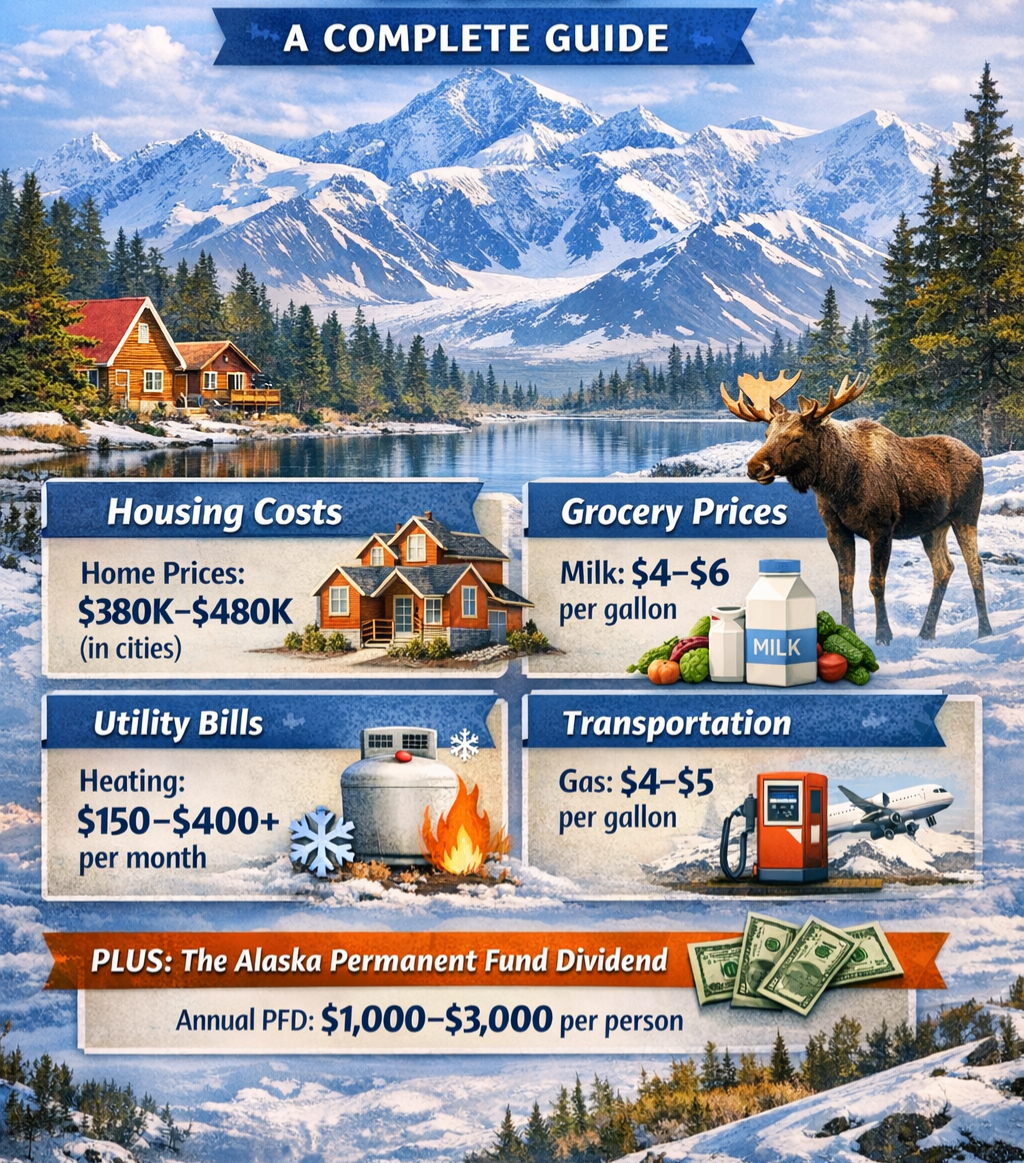
Anchorage: $380,000 – $450,000
-
Fairbanks: $280,000 – $340,000
-
Juneau: $400,000 – $480,000
-
Smaller towns: $200,000 – $300,000
Rental costs also vary depending on location.
Average Monthly Rent
-
Studio / 1-bedroom apartment: $1,100 – $1,600
-
2-bedroom apartment: $1,500 – $2,200
-
3-bedroom home: $2,000 – $3,000+
Remote areas may have cheaper housing, but limited availability and higher utility costs can balance out the savings.
Utility Costs
Because of Alaska’s long winters and cold temperatures, heating costs are a major part of monthly expenses.
Average Monthly Utilities
Typical monthly utilities for a household include:
-
Electricity: $120 – $220
-
Heating (natural gas or fuel oil): $150 – $400+ in winter
-
Water and sewer: $80 – $120
-
Internet: $70 – $120
Winter heating bills can rise significantly, especially in interior regions like Fairbanks, where temperatures may drop below -30°F (-34°C).
Grocery and Food Costs
Groceries in Alaska are generally 10–30% more expensive than the national average because many items must be imported.
Average Grocery Prices
Examples of typical grocery prices:
-
Milk (1 gallon): $4 – $6
-
Bread (loaf): $3 – $5
-
Eggs (dozen): $4 – $6
-
Chicken (1 lb): $4 – $7
-
Fresh produce: often 20–40% higher than the mainland
In remote villages, food prices can be much higher, sometimes double mainland prices due to transportation costs.
Many Alaskans offset food costs by:
-
Hunting
-
Fishing
-
Gardening during the summer
-
Buying bulk supplies
Transportation Costs
Transportation expenses depend largely on where you live in Alaska.
In cities like Anchorage, driving is common, while some remote areas rely on boats, planes, or snowmachines.
Common Transportation Expenses
-
Gasoline: $4 – $5 per gallon (average estimate)
-
Car insurance: $100 – $200 per month
-
Vehicle maintenance: slightly higher due to cold weather conditions
If you live in remote areas not connected by roads, you may also pay for air travel or freight shipping, which can increase living costs.
Healthcare and Insurance
Healthcare costs in Alaska tend to be higher than the national average due to limited providers and geographic challenges.
Average healthcare costs include:
-
Doctor visit: $120 – $200 without insurance
-
Health insurance premiums: $400 – $800 per month depending on coverage
However, Alaska also has strong healthcare services in major cities like Anchorage, Fairbanks, and Juneau.
The Alaska Permanent Fund Dividend (PFD)
One unique financial benefit of living in Alaska is the Permanent Fund Dividend (PFD).
Each year, eligible residents receive a payment from the state’s oil revenue investment fund.
Recent payments have ranged from roughly $1,000 to $3,000 per resident per year, depending on state revenue and legislation.
For families, this can add up significantly. For example:
-
Family of four could receive $4,000 – $12,000 annually.
This extra income can help offset the higher cost of living.
Average Monthly Budget in Alaska
Here is an estimated monthly budget for a single person living in a major Alaska city:
| Expense | Estimated Cost |
|---|---|
| Rent | $1,200 – $1,600 |
| Utilities | $200 – $400 |
| Groceries | $350 – $600 |
| Transportation | $200 – $400 |
| Internet & phone | $100 – $160 |
| Miscellaneous | $200 – $400 |
Estimated total:
? $2,200 – $3,500 per month depending on lifestyle and location.
Is Living in Alaska Worth the Cost?
While Alaska can be more expensive than many U.S. states, many residents feel the lifestyle benefits make it worthwhile.
Some of the biggest advantages include:
-
Incredible natural beauty
-
Outdoor recreation year-round
-
Less crowded communities
-
Unique culture and independence
-
Financial benefits like the PFD
For people who enjoy adventure, nature, and a slower pace of life, Alaska offers a living experience that few places can match.
Final Thoughts
The cost of living in Alaska in 2026 can vary widely depending on where you live and your lifestyle. While housing, groceries, and utilities may be higher than the national average, Alaska also offers unique financial advantages and an unmatched quality of life.
If you’re considering moving to Alaska or buying property here, understanding these costs can help you plan ahead and make the best decision for your future.